
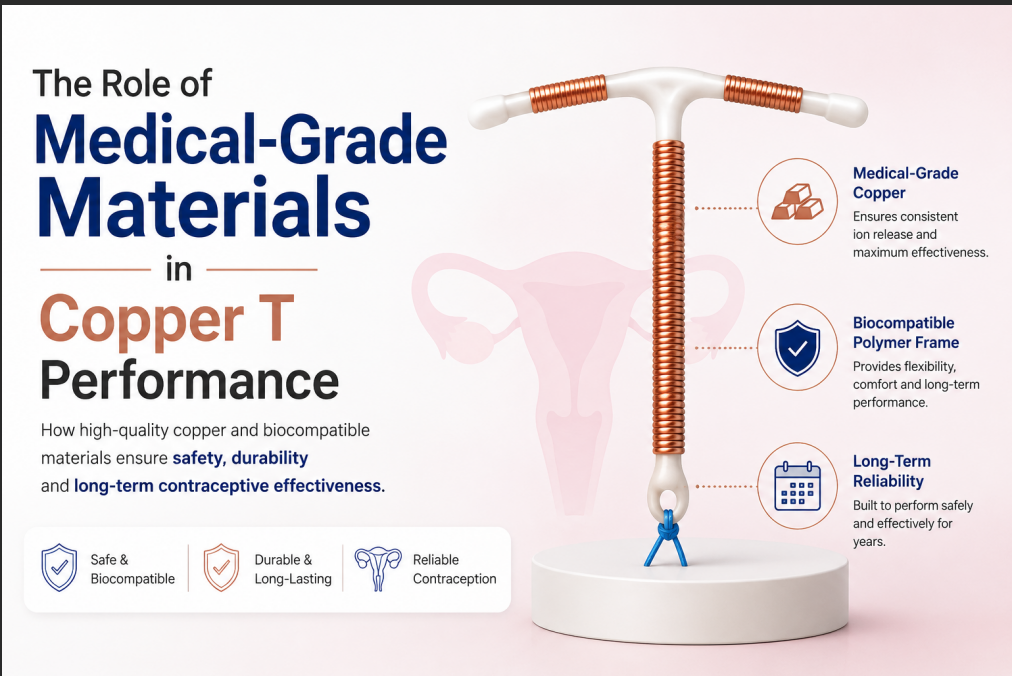

The Copper T is one of the most widely used intrauterine devices (IUDs) in the world, valued for its long-term, hormone-free contraceptive effect. What often goes unnoticed, though, is how much of its performance, safety, and longevity depends on the quality of the materials used to make it. Not all Copper T devices are built the same, and the difference often comes down to whether medical-grade materials were used in manufacturing. This article looks at why material quality matters so much for this particular device.
What Makes the Copper T Effective?
The Contraceptive Mechanism
The Copper T works by releasing a controlled amount of copper ions into the uterine cavity. These ions create a hostile environment for sperm, impairing motility and preventing fertilisation. Some also have a secondary effect on the uterine lining that further reduces the chance of implantation.
Why Material Purity Is Central to This Mechanism
Because the entire contraceptive effect depends on a steady, predictable release of copper ions, the purity of the copper used directly determines how consistently the device performs. Impure or poorly manufactured copper can release ions unevenly, corrode unpredictably, or degrade faster than intended, which shortens the device’s effective lifespan.
Medical-Grade Copper vs Standard Copper
What “Medical-Grade” Actually Means
Medical-grade copper is refined to a very high purity level and is manufactured under strict quality controls to ensure there are no toxic impurities such as lead or other heavy metals. It also undergoes testing for biocompatibility, meaning it’s confirmed to be safe for prolonged contact with human tissue.
Risks of Using Non-Medical-Grade Copper
Using copper that hasn’t been refined or tested to medical standards introduces several risks:
Inconsistent Ion Release
Impure copper can release ions in unpredictable bursts rather than a steady rate, reducing contraceptive reliability over time.
Increased Risk of Irritation or Toxicity
Trace contaminants in low-grade copper can trigger inflammation or allergic-type reactions in sensitive patients.
Premature Corrosion
Substandard copper is more prone to corrosion, which can shorten the device’s functional lifespan well below its intended duration, sometimes below the 5–10 years many Copper T devices are designed for.
The Role of the Polymer Frame
Why the Frame Material Matters Too
The copper wire is wound around a flexible polymer frame, usually made of polyethylene, that gives the device its T-shape and allows it to sit correctly in the uterine cavity. This frame needs to be flexible enough for insertion but firm enough to maintain its shape over years of use.
Biocompatibility of the Frame
Medical-grade polyethylene is formulated to be inert within the body, meaning it doesn’t degrade, leach chemicals, or provoke an immune response over the years it remains in place. A frame made from a lower-grade or non-medical polymer risks becoming brittle, deforming, or breaking down internally, which can compromise both comfort and safety.
How Material Quality Affects Real-World Outcomes
Longevity and Effectiveness
Devices built with certified medical-grade materials are far more likely to perform consistently across their entire rated lifespan, whether that’s 5, 8, or 10 years, without a noticeable drop-off in contraceptive effectiveness.
Patient Safety and Comfort
High-quality materials reduce the likelihood of adverse reactions, irritation, or device malfunction, which in turn reduces the number of early removals due to complications.
Clinical Confidence
For healthcare providers, sourcing devices manufactured with certified medical-grade copper and polymer components means fewer unexpected complications during follow-up visits and greater confidence when counselling patients on long-term use.
What to Look for When Sourcing Copper T Devices
Certification and Compliance
Look for devices manufactured in compliance with recognised medical device standards (such as ISO 13485) and backed by documentation confirming the purity of the copper used.
Manufacturing Transparency
Reputable manufacturers should be able to provide clear information on material sourcing, sterilisation processes, and quality testing protocols.
Regulatory Approval
Devices approved by relevant regulatory bodies have typically undergone material safety testing as part of the approval process, adding another layer of assurance.
Final Thoughts
The Copper T’s simplicity is part of its appeal, but that simplicity only works if the materials behind it are genuinely medical-grade. Purity of copper and the biocompatibility of the polymer frame aren’t minor manufacturing details; they’re the foundation of the device’s safety, comfort, and long-term contraceptive reliability. For clinics and patients alike, understanding this connection helps set realistic expectations about performance and underscores why sourcing from certified, quality-controlled manufacturers matters as much for an IUD as for any other implanted medical device.