
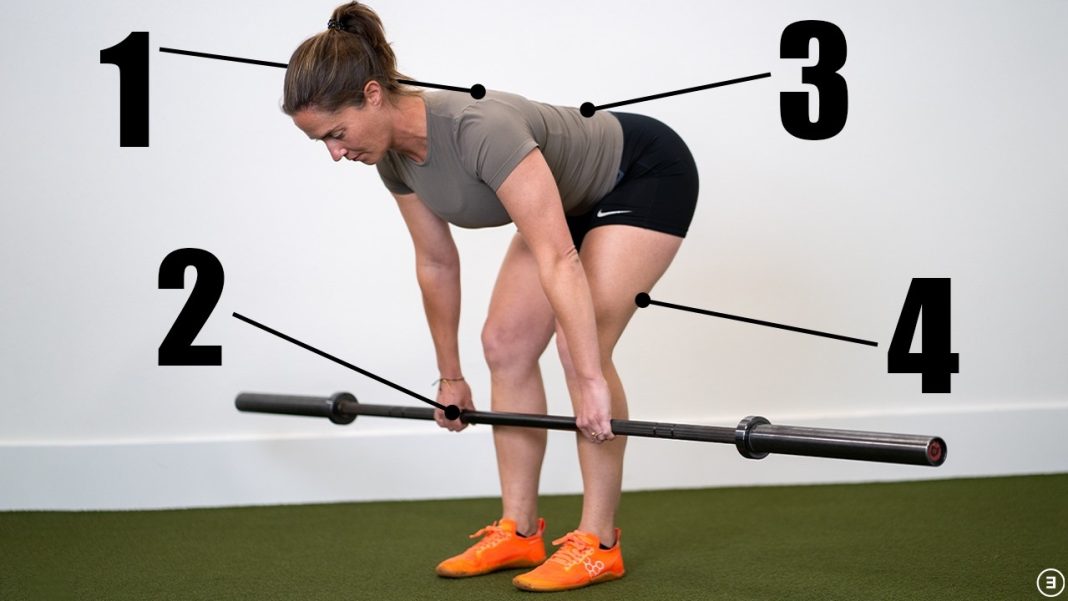
 is a cornerstone exercise for building hamstring, glute, and lower back strength.)
Introduction
The Romanian Deadlift is a variation of the traditional deadlift focusing on the hip hinge movement, targeting the posterior chain muscles. Unlike conventional deadlifts, the RDL emphasizes hamstring lengthening and glute engagement, making it ideal for improving flexibility, balance, and overall strength.
Overview of the Romanian Deadlift
The Romanian Deadlift begins with a slight bend in the knees and a neutral spine. The movement involves hinging at the hips, lowering the weight while keeping it close to your legs, and then returning to a standing position.
Unlike the conventional deadlift, the bar or dumbbells do not touch the floor between repetitions. This constant tension is excellent for muscle growth.
The Romanian Deadlift strengthens hamstrings and glutes with a safe hip hinge, improving balance, posture, and overall posterior chain development.
Benefits of Performing Romanian Deadlifts
- Strengthens hamstrings, glutes, and lower back
- Improves hip mobility and flexibility
- Enhances athletic performance in running and jumping
- Reduces risk of hamstring injuries
- Provides a foundation for advanced lifts like conventional deadlifts
Muscles Worked in a Romanian Deadlift
The RDL primarily targets the posterior chain, including:
| Muscle Group | Role in RDL |
|---|---|
| Hamstrings | Hip extension and knee stabilization |
| Gluteus Maximus | Hip extension |
| Erector Spinae | Spinal support and posture maintenance |
| Adductors | Assist with hip stability |
| Core Muscles | Stabilize the torso throughout the lift |
Romanian Deadlift Form: Step-by-Step Guide
Proper form is critical for maximizing benefits and preventing injuries. Here’s a step-by-step guide to performing the perfect Romanian Deadlift.
Starting Position
- Stand with feet hip-width apart.
- Hold a barbell or dumbbells in front of your thighs, palms facing your body.
- Engage your core and keep your shoulders down and back.
The Descent: Hip Hinge Technique
- Push your hips backward while keeping a slight knee bend.
- Keep the weight close to your body.
- Maintain a neutral spine – avoid rounding your back.
- Lower until you feel a stretch in your hamstrings, usually mid-shin level.
Keeping Your Back Safe and Neutral
- Keep your chest up and shoulder blades retracted.
- Avoid hyperextending or rounding your lower back.
- Imagine your torso and legs forming a straight hinge.
The Ascent: Returning to Standing
- Drive your hips forward while keeping the weight close.
- Contract your glutes at the top of the movement.
- Avoid leaning back excessively at the top.
Common Mistakes to Avoid
- Bending the knees too much, turning the RDL into a squat
- Letting the bar drift away from the body
- Rounding the back during the descent
- Overextending at the top of the lift
- Using too much weight before mastering form
Dumbbell Romanian Deadlift: How to Perform
The dumbbell Romanian deadlift is an excellent variation for home workouts or when a barbell isn’t available.
Equipment Needed
- A pair of dumbbells
-
Optional lifting straps for heavy loads
Step-by-Step Dumbbell Romanian Deadlift Technique
- Hold dumbbells in front of your thighs with a neutral grip.
- Hinge at the hips and push your glutes back.
- Lower the dumbbells along your legs until you feel a stretch in the hamstrings.
- Keep your core tight and spine neutral.
- Return to a standing position by contracting your glutes.
Tips for Maintaining Proper Form with Dumbbells
-
Keep wrists straight and avoid bending elbows.
-
Dumbbells allow for a slightly greater range of motion.
-
Focus on slow, controlled movements rather than heavy weights.
Single-Leg Romanian Deadlift: Balance and Stability
The single-leg Romanian deadlift is a unilateral variation that challenges balance and core stability while isolating each hamstring.
Why Perform Single-Leg Romanian Deadlifts?
- Corrects muscle imbalances
- Enhances hip and ankle stability
- Strengthens glutes and hamstrings individually
- Improves overall athletic performance
Step-by-Step Single-Leg Technique
- Stand on one leg, holding a dumbbell in the opposite hand.
- Hinge at the hip while extending the free leg straight behind you.
- Lower the weight along the standing leg until hamstrings stretch.
- Maintain a neutral spine and avoid twisting.
- Return to standing by contracting glutes and hamstrings.
Progressions and Variations
- Begin with bodyweight before adding dumbbells
- Perform in front of a mirror to check balance
- Add a pause at the bottom for increased tension
Romanian Deadlift Variations for Advanced Lifters
Once you master the basic RDL, several variations can challenge your strength further.
Barbell vs Dumbbell Romanian Deadlift
- Barbell RDL: Better for heavier loads, compound strength.
- Dumbbell RDL: Greater range of motion, safer for beginners.
Deficit Romanian Deadlift
- Perform standing on a platform to increase range of motion.
- Enhances hamstring flexibility and strength.
Tempo Romanian Deadlift
- Slow eccentric lowering phase increases time under tension.
- Improves muscle activation and control.
Safety Tips and Injury Prevention
Performing Romanian deadlifts safely is crucial for long-term gains.
Proper Warm-Up and Stretching
- Dynamic stretches like leg swings, hip circles, and bodyweight RDLs.
- Activate glutes and hamstrings with bridges or banded exercises.
How to Avoid Hamstring and Lower Back Injuries
- Never round your back.
- Start with lighter weights to perfect form.
- Progress gradually in weight and reps.
Mastering Romanian deadlift form prevents injury, strengthens glutes and hamstrings, and builds a strong posterior chain for better athletic performance.
Romanian Deadlift Workout Routine Examples
Beginner Routine
- Dumbbell RDL: 3 sets x 12 reps
- Bodyweight single-leg RDL: 3 sets x 10 reps per leg
- Glute bridges: 3 sets x 15 reps
Intermediate Routine
- Barbell RDL: 4 sets x 8-10 reps
- Dumbbell single-leg RDL: 3 sets x 10 reps per leg
- Romanian deadlift with tempo: 3 sets x 6 reps
Advanced Strength Routine
- Heavy barbell RDL: 5 sets x 5 reps
- Deficit RDL: 3 sets x 8 reps
- Single-leg RDL with pause: 3 sets x 8 reps
(5 key tips)
- Focus on the hip hinge instead of bending knees
- Keep the weight close to your body
- Maintain a neutral spine at all times
- Use controlled tempo for better muscle activation
- Progress gradually to heavier weights
Incorporate dumbbell and single-leg Romanian deadlifts into your routine to strengthen hamstrings, glutes, and core while improving balance.
Conclusion
The Romanian Deadlift is a versatile and highly effective exercise for developing strength, flexibility, and balance. Whether performed with a barbell, dumbbells, or single-leg, mastering proper form is essential to maximize benefits and prevent injury. Incorporate these variations into your workout routine, focus on the hip hinge, and maintain a neutral spine for optimal results.
Perfecting Romanian deadlift form builds strong hamstrings, glutes, and lower back while enhancing stability, balance, and overall athletic performance.
Read More:- Romanian Deadlift Techniques for Strength and Muscle Growth