

Introduction
The Romanian Deadlift, often abbreviated as RDL, is a highly effective exercise for building strength and promoting muscle growth, particularly in the posterior chain. The posterior chain includes muscles such as the hamstrings, glutes, and lower back, which play a critical role in athletic performance, posture, and overall functional strength. Unlike conventional deadlifts, which focus on lifting maximum weight from the ground, the Romanian deadlift emphasizes controlled movement, proper form, and stretching of the hamstrings through the full range of motion.
Many fitness enthusiasts and professional athletes incorporate Romanian deadlifts into their training routines to enhance both strength and hypertrophy. Its unique movement pattern allows for muscle activation without placing excessive strain on the lower back, making it safer for long-term training. The key to performing this exercise effectively lies in maintaining a neutral spine, engaging the core, and hinging properly at the hips while lowering the weight.
The Romanian Deadlift builds posterior chain strength safely, targeting hamstrings, glutes, and lower back while enhancing muscle growth and overall stability.
What is a Romanian Deadlift?
A Romanian Deadlift is a weightlifting exercise that targets the posterior chain muscles by hinging at the hips while keeping the knees slightly bent. It differs from traditional deadlifts by maintaining tension on the hamstrings throughout the movement rather than lifting from a fully grounded position. The exercise is commonly performed using a barbell but can also be done with dumbbells for home workouts or lighter resistance training.
The RDL involves lowering the weight while keeping it close to the body, ensuring that the back remains flat and the movement originates from the hip hinge rather than the lower back. This controlled motion maximizes hamstring stretch and glute engagement, which not only builds strength but also improves flexibility. Over time, Romanian deadlifts contribute to better posture, stronger lifts in squats and conventional deadlifts, and increased power for athletic activities like sprinting and jumping.
Romanian Deadlift vs Traditional Deadlift
Understanding the difference between a Romanian Deadlift and a traditional deadlift is critical for training effectively. Traditional deadlifts, often called conventional deadlifts, begin with the barbell on the floor, and the lifter bends the knees and hips simultaneously to lift the weight to a standing position. The primary goal of a conventional deadlift is maximal strength, and it recruits multiple muscle groups including the quads, back, and grip.
The Romanian Deadlift, in contrast, starts from a standing position and focuses on lowering the weight with a hip hinge while keeping the legs relatively straight. The RDL emphasizes hamstrings and glutes over the quads, making it a better exercise for targeting the posterior chain specifically. Additionally, because RDLs involve less overall weight, they reduce the risk of lower back injuries while allowing lifters to perform higher repetitions for hypertrophy.
Romanian Deadlifts focus on hamstrings and glutes with controlled hip hinge, unlike traditional deadlifts that target full-body strength and maximum lifting power.
How to Perform a Romanian Deadlift
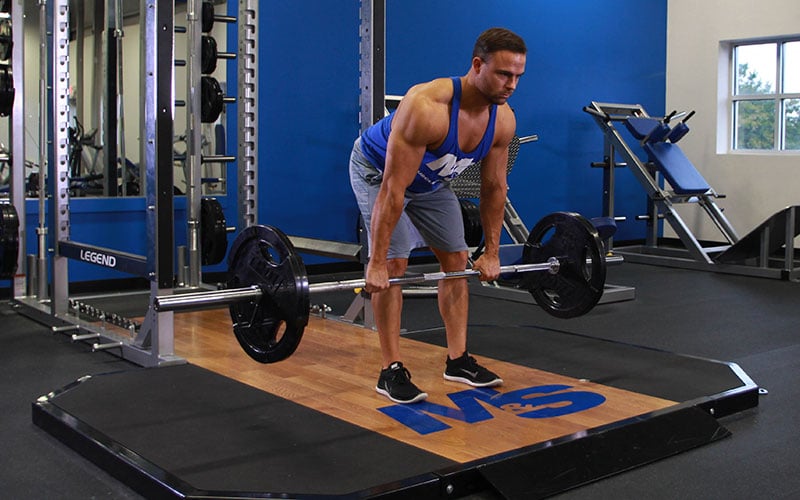
Proper technique is essential to maximize the benefits of the Romanian Deadlift while minimizing injury risk. Begin by standing with feet shoulder-width apart, holding a barbell or dumbbells in front of your thighs with an overhand grip. Keep a slight bend in the knees and engage your core. The movement starts by pushing your hips backward and lowering the weight along your legs, maintaining a straight back.
The barbell should remain close to the body throughout the descent, and the lifter should feel a stretch in the hamstrings. Lower the weight until you reach mid-shin or feel a firm stretch in the posterior chain, ensuring not to round the lower back. From this position, reverse the motion by driving the hips forward to return to a standing position. Maintain control and avoid jerking or bouncing, as this could strain the lower back.
Breathing properly is also essential. Inhale while lowering the weight and exhale as you return to the standing position. Gradually increase the weight as you become more comfortable with the movement, focusing on form rather than lifting maximal loads.
Romanian Deadlift with Dumbbells
Performing Romanian Deadlifts with dumbbells provides several advantages, particularly for beginners or those training at home. Dumbbells allow for a greater range of motion and encourage balanced development, as each arm must control its own weight. To perform the exercise, hold a dumbbell in each hand with palms facing the body. The movement pattern mirrors that of a barbell RDL: slight knee bend, hip hinge, lowering the dumbbells along the thighs, and returning to standing.
Dumbbell Romanian Deadlifts can also be used to improve grip strength, correct muscle imbalances, and enhance core stabilization. Because dumbbells are lighter than a loaded barbell, lifters can perform more repetitions to increase muscle endurance while maintaining excellent form. Additionally, dumbbells are more versatile, allowing for single-leg variations or alternating movements to further challenge balance and coordination.
Romanian Deadlift Exercise Variations
The Romanian Deadlift can be modified in multiple ways to target muscles differently or increase difficulty. One common variation is the single-leg Romanian Deadlift, which focuses on balance, unilateral strength, and stability. Another variation involves using resistance bands instead of weights, which changes the tension curve and challenges muscles throughout the movement.
Barbell RDLs are ideal for progressive overload and strength development, while dumbbell RDLs enhance range of motion and control. Powerlifters often incorporate RDLs into their accessory work to improve conventional deadlift performance. Athletic programs also use Romanian Deadlifts to improve sprinting speed, jumping ability, and overall posterior chain strength.
Common Mistakes to Avoid
Despite its apparent simplicity, the Romanian Deadlift is prone to mistakes that can reduce its effectiveness or lead to injury. A common error is rounding the lower back during the hip hinge, which places excessive stress on the lumbar spine. Lifting with the knees locked or legs too straight can also strain the hamstrings and reduce the range of motion.
Another frequent mistake is allowing the barbell or dumbbells to drift away from the body. Maintaining close contact ensures proper biomechanics and maximizes muscle engagement. Finally, rushing through the movement or using momentum can undermine the purpose of the RDL. Focusing on slow, controlled motions is critical for muscle growth and injury prevention.
Incorporating Romanian Deadlifts into Your Workout
Romanian Deadlifts can be included in a variety of training routines, from strength-focused programs to bodybuilding regimens. For hypertrophy, performing 3 to 4 sets of 8 to 12 repetitions with moderate weight is recommended. For strength, heavier weights with 3 to 5 sets of 4 to 6 repetitions are ideal.
It is important to pair Romanian Deadlifts with complementary exercises such as squats, lunges, and pull-ups to ensure balanced development. Additionally, including mobility exercises for the hamstrings, hips, and lower back enhances performance and reduces the risk of injury. Recovery is equally important, as the RDL heavily taxes the posterior chain. Stretching, foam rolling, and proper nutrition aid in optimal muscle repair and growth.
Table: Romanian Deadlift vs Traditional Deadlift Comparison
| Feature | Romanian Deadlift (RDL) | Traditional Deadlift (Conventional) |
|---|---|---|
| Starting Position | Standing | Floor |
| Primary Muscles Targeted | Hamstrings, Glutes, Lower Back | Quads, Hamstrings, Glutes, Back |
| Knee Bend | Slight | Deep |
| Range of Motion | Controlled, stretch-focused | Full lift, floor to standing |
| Weight Used | Moderate | Heavy |
| Goal | Hypertrophy, Posterior Chain Strength | Maximal Strength |
| Risk of Lower Back Injury | Lower if done correctly | Higher if technique fails |
Conclusion
The Romanian Deadlift is a foundational exercise for anyone seeking to build strength and muscle in the posterior chain. Its unique focus on the hamstrings, glutes, and lower back allows for hypertrophy, improved athletic performance, and injury prevention. Whether performed with a barbell or dumbbells, the key to success lies in proper form, controlled movements, and gradual progression.
Including Romanian Deadlifts in your training program ensures well-rounded development and enhances other lifts like squats and conventional deadlifts. Remember, consistency, focus on technique, and balanced programming are the pillars of long-term progress.
Romanian Deadlifts build hamstrings, glutes, and back strength while improving posture and athletic performance, making them essential for muscle growth.
Read More:- How to Do a Romanian Deadlift Safely and Effectively